
You stand at an intersection in the heart of Manhattan, look up, and it feels as if the city is dissolving into the sky. There is so much glass around that you stop understanding whether it’s still architecture or already an optical illusion. Transparent facades have become part of the city’s code. They change the way we see the city and ourselves within it. In this text on manhattan-future.com, we explain how glass captivated architects, why Manhattan looks more like a mirrored canyon, what the future holds for this glass kingdom, and if there is a limit to transparency.
The Glass Revolution: Where Did It All Begin?
It all started with the Lever House – a greenish glass box that appeared on Park Avenue back in 1952. It resembled an alien among the stone seriousness of its neighbors and immediately became a meme for architects. It was the first hint: glass is not necessarily a window. The entire building can be made of it.
The trend grew from there. In the 21st century, transparency became a major architectural trend. The surface area of glass buildings expanded, and load-bearing structures seemed to disappear. A style emerged where the frames are barely noticeable, and the building looks like a taut, shimmering film reflecting the light. Architects embraced this aesthetic and literally carried it skyward. Manhattan’s high-rises no longer intimidate with their weight – they play on lightness, on light, making you feel like an ant standing before a huge mirror.
Transparency initially became a fashion, but then something absolutely natural. It seems to say: we are open, we are modern, we have something to show. Although sometimes it feels like there isn’t much to show—just a panorama with expensive finishes. But more on that later.
The Formula for Transparency: The Technologies Behind It
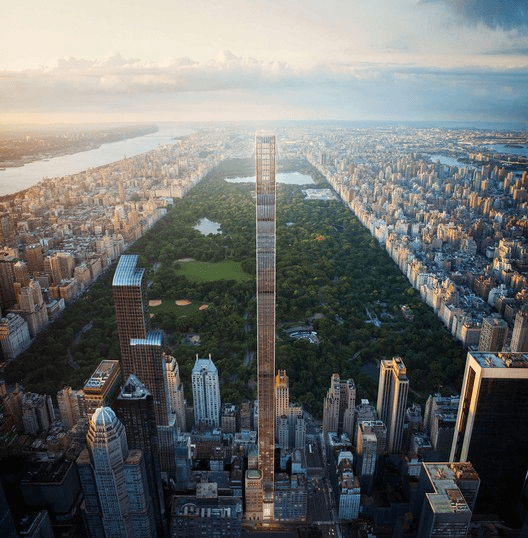
Modern facades are not the kind that rely on a wing and a prayer and concrete. Behind every gleam is a technical trick, often dozens of them. For a wall to look like one continuous window (or its complete absence), systems are needed that can withstand everything – from wind to fire.
Curtain Wall, Structural Glazing, Modular System – What’s the Difference?
The curtain wall technology involves a light frame attached to the building’s exterior, essentially a separate glass “skin.” It does not bear the weight of the structure – it only creates the facade. Structural glazing goes even further: here, the glass is attached with almost no visible frames, creating a seamless surface. And the modular system is the most “factory-made” option: large modules of metal and glass are assembled in advance and installed on site like finished tiles.
In North America, the market for glass curtain walls was valued at approximately $9.66 billion in 2024. It was then projected to reach a level of about $16.6 billion by 2032.
To speak even more broadly, the global market was valued at $61.3 billion in 2024 and, according to forecasts, had the potential to reach $105.6 billion by 2033.
In other words, glass in architecture has enormous economic potential. And Manhattan is just one of many proofs of this.
How “Smart” or Energy-Efficient Glass Works
Glass today can do more than it seems. It can be energy-saving – with a low-emissivity (Low-E) coating that traps heat in winter and reflects the sun in summer. It can also change its transparency depending on the lighting or remote control commands. Smart glass is appearing in an increasing number of projects, although for now, it costs an arm and a leg. But one thing is clear: glass has become an active player in the architectural market.
Glass Icons: Manhattan’s Most Famous Facades
Manhattan is dotted with skyscrapers, but some of them make you want to stop a taxi, get out, and simply gaze around in awe. They look like crystals, mirrors, or something out of the future.
For example, One Vanderbilt – 427 meters of glass, light, and mathematical precision. More than eight thousand glass panels were installed here, some of which are unique in shape because the tower is slightly slanted. All of this was designed to make the building appear almost weightless.
Next up is Hudson Yards, especially the 10 Hudson Yards tower. The facade appears to be composed of separate mirrored elements that reflect the sky, the city, neighboring buildings, and yourself. This creates the sensation that the skyscraper is actually dissolving into the landscape.
432 Park Avenue is a different type. Visually it’s pure minimalism: square on square. But the glass facade here works as a contrast – it emphasizes the perfect geometry and the strange emptiness between the windows.
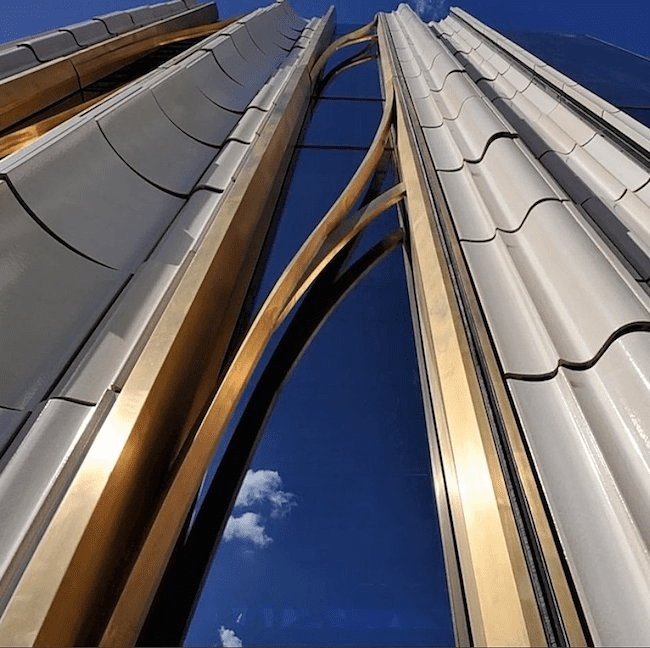
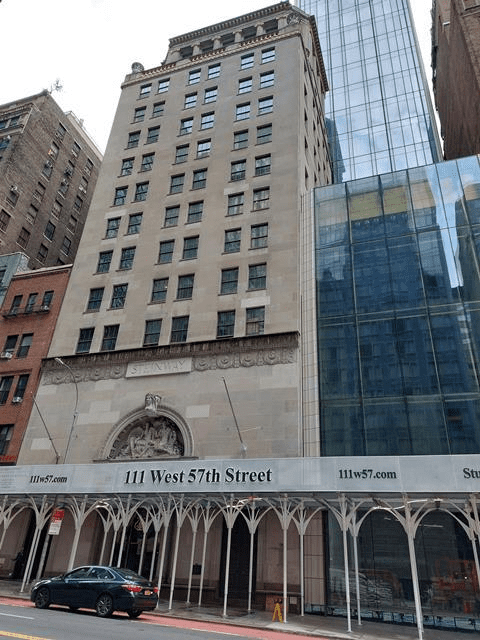
And then there’s 111 West 57th – very narrow and very tall. The glass elements alternate with terracotta, and the entire facade shimmers like a scarf made of Lurex. During the day, light reflects off the panels, and in the evening, it streams from within. This already resembles a genuine light installation.
Each of these facades is a showcase of the metropolis, which seems to say: “Look what we are capable of.” Or at least: “Take our picture, we tried hard.”
Light and Shadow: The Problems of Glass Aesthetics
All that glitters is not always gold. Glass facades are beautiful, photogenic, and technologically advanced. But behind every panel are things that architects would prefer to keep behind the scenes.
Let’s start with the obvious – heat. Glass is a poor insulator. If expensive Low-E coatings or triple glazing are not used, the building heats up like an oven. Therefore, air conditioners run at full blast, and bills skyrocket like those skyscrapers. In summer, glistening facades can literally roast pedestrians below – this already happened with the Walkie-Talkie in London, but Manhattan is not immune to it either.
Another nuance is maintenance. Glass looks luxurious right up until the first rain with dust or a leak from the heating system. Cleaning a facade on the 80th floor is an activity not for the faint of heart and certainly not cheap. More surface area means more work.
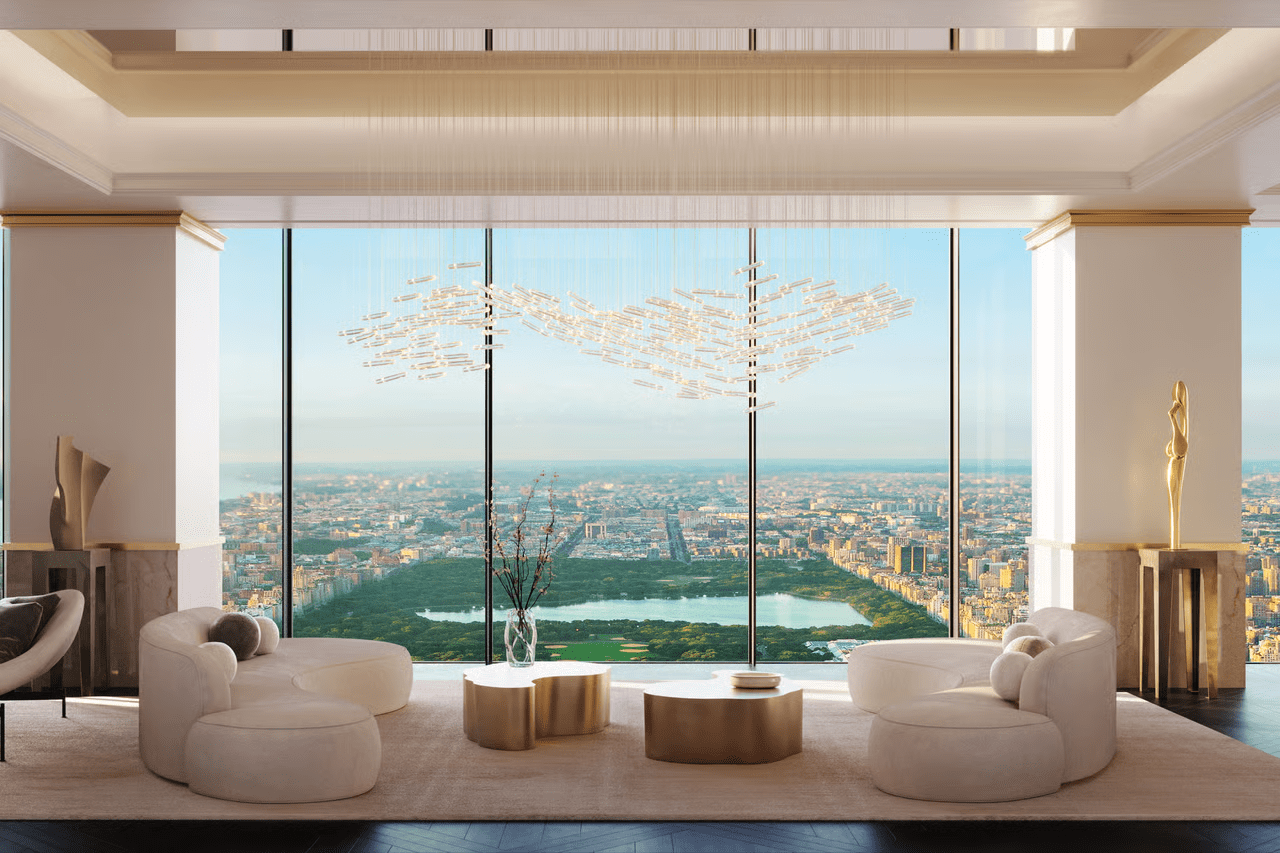
During the day, you are visible from the street; at night, even more so, because the windows illuminate the residents with artificial light. And even if a luxurious view opens up from the inside, you always have spectators. Residents of such buildings often immediately close the blinds or curtains. And then the question arises: why all this glass if you are hiding behind fabric anyway?
Moreover, the glass facade creates a feeling of constant visibility. You are like a product in a display window. Architecture becomes a backdrop, and people are figures put on display. This works for the picture, but far from always for comfort.
What Awaits Manhattan’s Architecture in the Future
Manhattan never stands still – it’s a 24/7 playground for architectural experiments. And although glass is already everywhere, architects are just getting started. In the near future, we can expect even thinner frames, even larger panels, and even more sophisticated technologies. Interactive glass that reacts to touch or changes the degree of transparency depending on the weather is already appearing in projects.
Among the new trends are facades that become part of energy-saving systems: for example, glass with built-in solar elements. Or buildings where the facade acts as a screen – showing charts, greetings, or abstract animations. Some are already talking about the “facade as an interface” – as if you are not just looking at a building, but interacting with it.
At the same time, interest in alternatives – wood, ceramics, metal – is slowly growing. Not everyone wants to live in a mirrored box. Perhaps someday Manhattan will surprise again, but not with total transparency, but quite the opposite: with diversity.
For now, though, glass remains the hero of the era. It shapes the impression of the city, creating a backdrop for TV shows, selfies, and business meetings. And it seems that today, glass, better than any slogans, says: “This is New York, baby! This is Manhattan, where one of the song’s heroes wanted to live to share secrets with Demi Moore!” Although, glass facades are a trend for many other cities too, such as Liverpool.

